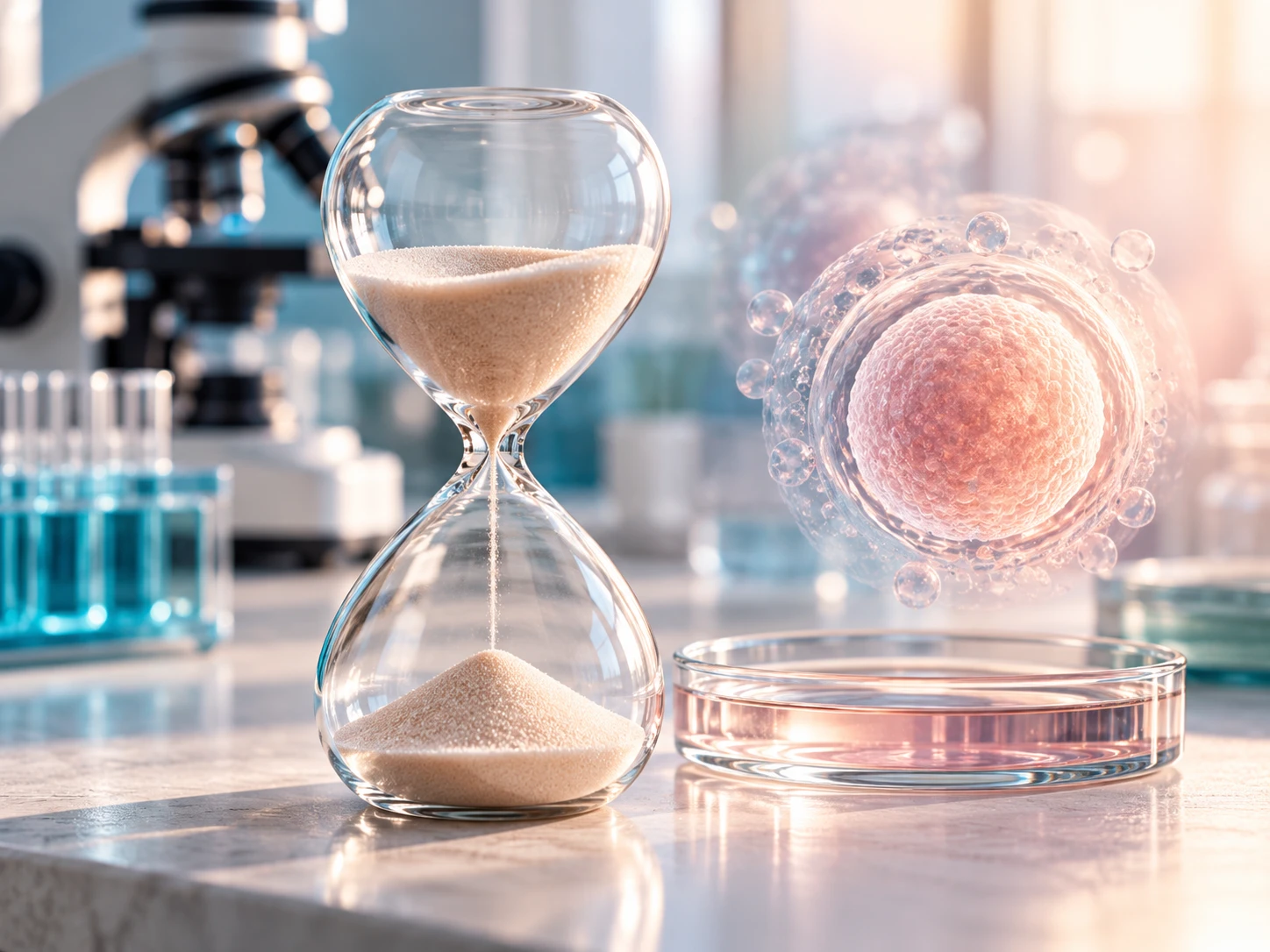
For a century, medicine measured success in years of life. The frontier now is healthspan: the years lived in good function, not merely alive. Within that shift sits a subject still treated as a side conversation and deserving of the centre. I call it reproductive longevity: the length and quality of the years in which the reproductive system, and the hormonal signalling it drives, supports whole-body health.
We tend to think of fertility as a question of whether and when to have children. That framing is too small. The reproductive system is one of the body’s master regulators. When it ages, it does not age quietly or alone. It helps set the pace for bone, brain, heart, metabolism, and immunity. To care about longevity and to ignore reproductive aging is to read the last chapters of a book and skip the ones that explain them.
The ovary is not only an organ of fertility. It is one of the first clocks of aging to run down, and it pulls others with it.
The ovary as a pacemaker of aging
Here is what makes reproductive aging so revealing. Most organs decline gradually across a long life. The ovary is different. It begins with a fixed endowment of follicles and loses them on an accelerating curve, so that reproductive capacity falls decades before most other systems show their age. In that sense the reproductive system is a preview of aging, visible earlier and measurable sooner than almost anything else.
The consequences are systemic because the hormones involved are systemic. Estrogen is not a reproductive hormone that happens to have side effects elsewhere. It is a signalling molecule with receptors throughout the body, shaping bone density, cardiovascular function, cognition and mood, metabolic regulation, and the health of skin and connective tissue. When its production falls at menopause, the effects are felt far from the ovary. That is why the menopause transition is increasingly understood as a whole-body event rather than a set of symptoms to be waited out.
The immune and inflammatory dimension
There is a further layer that my own background in virology and immunology brings into focus. Aging is, in large part, an inflammatory process, sometimes called inflammaging, and the immune system and the reproductive system are in constant conversation. Reproductive immunology, the study of how the immune system supports or disrupts fertility and pregnancy, is one of the most underappreciated areas in all of medicine. The same immune shifts that influence vulnerability to infection also influence reproductive function and the trajectory of reproductive aging. Any serious account of reproductive longevity has to include immunity, not treat it as a separate department.
Men age reproductively too
Reproductive longevity is not only a women’s subject. Male reproductive aging is slower and quieter, but real: sperm quality and quantity change with age, testosterone declines, and paternal age carries its own implications. The cultural assumption that the clock is a women’s problem is both scientifically incomplete and, frankly, convenient. A complete view holds both.
Why now
Reproductive longevity is having its moment because several powerful trends are arriving at once and pointing at the same biology.
- Demographics. People are building families later than any generation before them, which turns reproductive timing from a private matter into a central life and financial decision.
- The menopause awakening. Menopause, long dismissed and underserved, is being recognised at last as both a major unmet medical need and one of the decade’s largest markets.
- The metabolic era. The GLP-1 moment has made metabolic health a mainstream conversation, and metabolism and reproduction are deeply linked, from PCOS to the hormonal effects of body composition.
- Longevity and femtech. Longevity medicine and femtech have created audiences, capital, and tools that did not exist a decade ago, from ovarian reserve testing to biological-age clocks.
- AI and diagnostics. AI and at-home diagnostics are making it possible to measure and personalise reproductive and hormonal health at a scale that was impossible before.
Everyone is circling the same biology from a different door. The question is who connects the rooms. Reproductive longevity is also where the health conversation meets industries that rarely talk to one another: skincare and aesthetics, nutrition, the peptide wave reshaping men’s health, supplements, wellness and hospitality, even clean beauty, where consumers increasingly ask what their products do to their hormones. These are the everyday surfaces through which people actually encounter longevity. The work ahead is to tell the truth about what works together, what does not, and why, rather than letting each industry sell its own fragment.
Extending the fertile healthspan, in practice
What does it mean, concretely, to extend the fertile healthspan? It means a shift from reacting to reproductive decline to understanding, measuring, and where possible protecting reproductive health across the life course. The honest version separates what is established from what is promising but unproven.
Established and within reach
- Preservation. Fertility preservation, such as egg and embryo freezing, remains the most direct way to decouple reproductive timing from reproductive aging, and it is now a mainstream option rather than an exceptional one.
- Measurement. Measuring and monitoring reproductive status, through ovarian reserve markers and hormonal assessment, lets people make decisions with information rather than anxiety.
- Metabolic and lifestyle levers. Body composition, sleep, exercise, and the management of conditions like PCOS have real and underused effects on reproductive and hormonal health.
- Hormone therapy, reconsidered. Menopausal hormone therapy, reconsidered in light of better evidence and better risk stratification, is a central tool for protecting the systems estrogen supports. It deserves a nuanced, individualised conversation, not the blanket fear of the past two decades.
Promising but investigational
A frontier of research is exploring whether ovarian aging itself can be slowed or partly reversed, through approaches ranging from ovarian rejuvenation techniques to interventions studied in the broader longevity field. This science is genuinely exciting and genuinely early. The responsible position is to follow it closely, to be honest that much of it is unproven in humans, and to protect people from paying premium prices for promises the evidence does not yet support.
Hope is not a treatment. In this field, credibility is the whole asset.
What this means, and for whom
Reproductive longevity is not a single market. It is a lens that changes decisions across many.
- Individuals and families. A chance to plan proactively rather than react, with expert guidance that is on their side and free of any single clinic’s incentives.
- Employers and insurers. Fertility and menopause support have become decisive benefits for attracting and keeping talent, and they are also genuine levers of workforce health and cost.
- Femtech, longevity, and life-science companies and investors. A field rich with real need and real noise, where scientific credibility is the scarcest and most valuable input to product, strategy, and diligence.
- Hospitality and wellness. A natural home for medical-grade longevity experiences, where reproductive and hormonal health belongs alongside metabolic and aesthetic offerings.
Why the whole world, and why Africa in particular
Reproductive longevity is often framed as a concern of wealthy women in a handful of cities. That is a failure of imagination. The biology is universal, and the need is global, from the Americas and Europe to the Gulf, across Asia to Australasia, and above all across Africa, where young populations, rising investment in health, and deep cultural knowledge of family and fertility meet. The regions too often treated as afterthoughts are where the next chapter of this field will be written. Building for them from the start, rather than exporting to them later, is both the right thing and the larger opportunity.
The Carapuse Bay view
We hold a few principles without apology.
- Science over hype. We will say plainly what is proven, what is promising, and what is unproven, even when the market would prefer otherwise.
- Personalisation. Reproductive longevity is individual biology, not a protocol. The answer begins with the person.
- Equity and reach. The benefits of this science should widen, not narrow, who gets to live well. That means building for the whole world, deliberately.
- Advocacy. We sit on the client’s side of the table, never the seller’s.
This piece is adapted from the first in a series of Carapuse Bay papers on the frontiers of health and human longevity, from the metabolic era and AI in medicine to human resilience in the most extreme environments. A fully referenced edition, drawing on the Study of Women’s Health Across the Nation (SWAN) and guidance from the American Society for Reproductive Medicine and the Menopause Society, is available on request.
This article is for education and discussion. It is not medical advice and does not create a clinician-patient relationship. Carapuse Bay provides non-clinical advisory and advocacy; personal medical decisions belong with your own licensed treating providers.